


Stop Wasting Money! 5 Smart Home Devices You’ll Regret Not Owning.

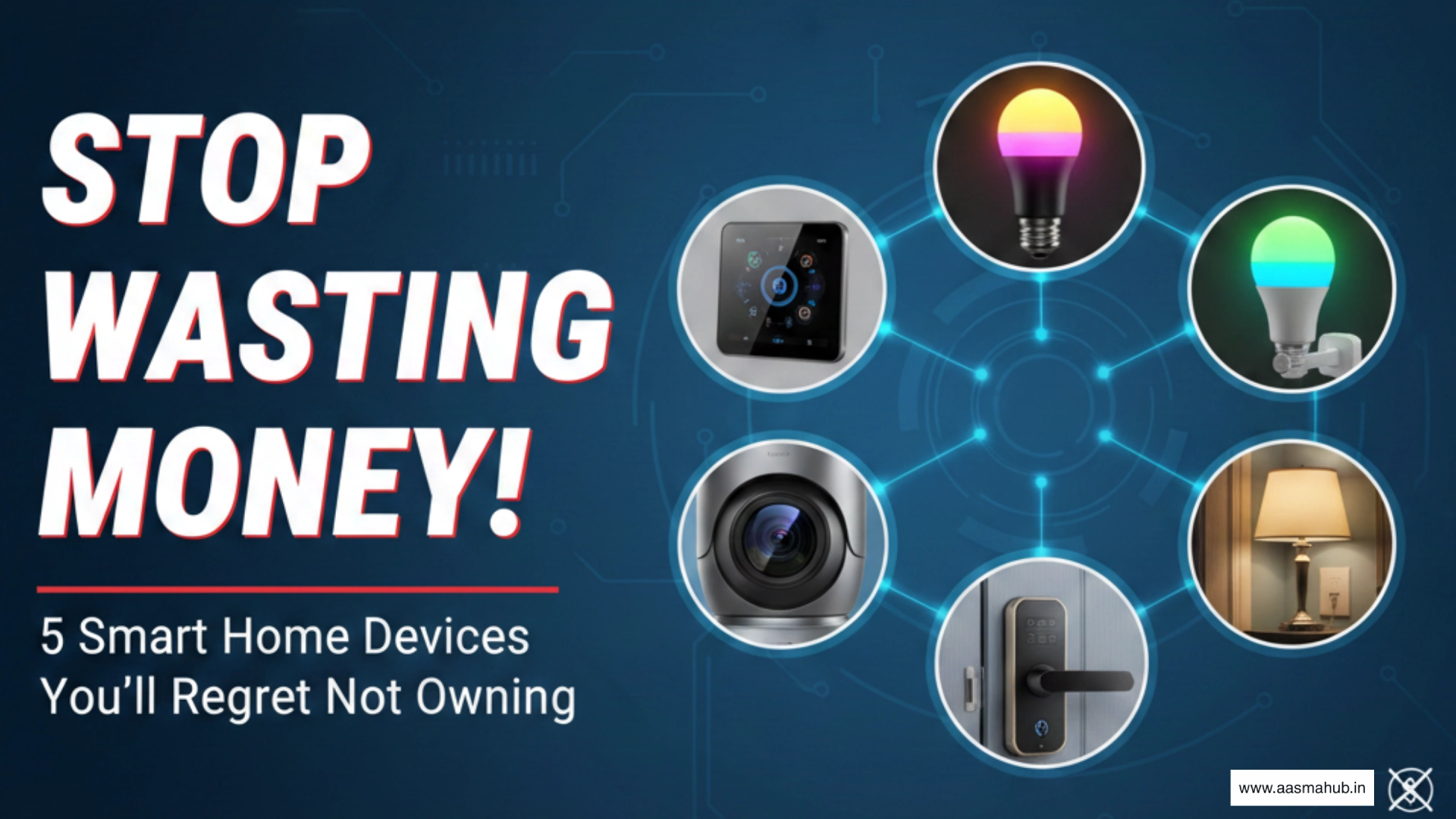
It is the perennial homeowner’s paradox: The monthly bill from your local utility arrives, and it does not make sense, not that you can remember precisely what your budget was. You make an effort to be more vigilant, you remind the kids to turn off the lights; turn down the thermostat before leaving for the day, but in terms of savings, it is lost in a drop in a bucket.
You may feel as if you are living in a slightly smarter house, perhaps just a tech-addled one, but it is hardly the kind of home that saves its owner money. The fact is, you are still out there squandering money every day. And you know what? It is because your home lacks the critical brains that other smart home devices can provide.
It is not just about being fancy. It is a question of smarts and effectiveness. With the right home automation gadgets, you can stop stabbing in the dark when it comes to energy use, drive down your home’s security risk, and most importantly, put money back in your pocket.
If you are without these smart devices for home already, boy, are you going to feel some FOMO, not for the latest and greatest in tech but for the savings and simplification they bring.
So let us discuss the top 5 smart home devices that will not just bring your living space up to date; they will straight-up make you resent every prior day of your life spent in a less sophisticated domicile.
The Smart Thermostat: The Ultimate Bill Slayer

You would not keep your car running in the driveway for 8 hours so why is you HVAC system running all out for an empty house? The outdated programmable thermostat, though a step in the right direction, is a dinosaur. It is on a fixed schedule that does not adapt to your life.
The actual regrettable mistake is not having a self-learning smart thermostat like the Google Nest Thermostat or Ecobee Smart Thermostat. But these home devices are not just about scheduling, they are about smarts.
How they save you money (and why you will be sorry if you do not have any):
These thermostats can learn over time, taking note of your habits. They know when you leave the house (through your phone’s location or sensors) and automatically switch into an energy-saving mode. They also take weather forecasts and use that information to better condition your home by heating or cooling it more efficiently.
So, when you receive that first power bill after a hot summer or freezing winter and your energy usage number is way lower than that of your neighbour, suddenly you will regret all those years of overspending. The smart home devices in this list will pay for every dollar you spend on them.
Smart Lighting Systems: Beyond Just Convenience

No more “Oh my God, did I leave the bathroom light on?” days. as you arrive in your driveway are long gone. It is not just about the added convenience of barking orders at my TV (“Alexa, switch off the bedroom lights”). The issue is energy intelligence and its security
Lots of folks believe that a simple LED light bulb is “GOOD ENOUGH,” but the greatest power really comes from an entire smart lighting system. It might look like smart bulbs if you are in the popular but rather more expensive Philips Hue ecosystem, or if you have been making do with something a little cheaper, then it need not be — smart switches and plugs from companies like Havells or Kasa will probably get the job done for half the money.
The “Regret” Factor: The biggest regret you will have is that you could have been automating your lighting according to when it has needed most or due to the motion sensed by it. When you leave for a vacation, think about what even an ordinary timer could do to make your house appear lived-in (and deter potential burglars).
And perhaps more meaningfully, how often have we got home to find a light or the TV left on all day in an empty room? The smart home automation gadgets devices let you see what is on or to switch everything off while away from any location in the world, preventing them sucking electricity for no reason.
The Smart Security Camera: Peace of Mind is Priceless (and Potentially Cost-Saving)

Yes, consider a home security system as the insurance for your peace of mind, with a decent smart camera that can stop hefty financial loss too. Internet-connected HD cameras like the Arlo Essential Security Camera or Qubo Smart Security Camera offer a live view of what is happening, along with motion recordings that send alerts straight to your smartphone.
Value for Costs: The value comes down to preventing and evidence. A smart doorbell can thwart the ever-so-common problem of porch piracy and prevent losing out on valuable packages. Indoor cameras allow you to check in on pets, saving you trips to the vet for issues that could be handled from afar.
The potential for avoiding an expensive insurance deductible or a complete loss from a break-in (which you can provide footage of to the police) is invaluable. This is a prime example of one of the most critical smart devices for home that people regret not installing before an incident.
Not only could it potentially save you from forking over an expensive insurance deductible if someone breaks into your home, but the peace of mind that comes with having footage to turn in to the police is priceless. This is the kind of smart devices for home that one will wish they had already installed before something happens.
The Smart Lock: The End of Lost Keys and Anxiety

We’ve all been there: You are halfway to work and a cold sweat slams into your face with the query, “Did I lock the front door?” That fear that you may regret walking out without securing your home for hours is strong.
The smart lock, such as Qubo Smart Door Lock or Native Lock Pro from UC Urban Company not only solves that issue with a tap of your phone it also changes the approach for accessing your home.
Why this is a top pick: You never have to worry if you locked the door, or where your kids put their keys. And gone is the need to give out spare keys that you could lose; now you can generate unique, temporary access codes for dog walkers, cleaners, or your in-laws.
Some advanced smart locks, often integrated with other smart home devices or a hub, can even lock your door automatically after a set period or when your phone leaves the immediate vicinity. The real financial benefit often comes in the form of lower homeowner’s insurance premiums in some locations, as it is considered a significant security upgrade.
And where it really makes a financial difference is that some homeowners get reduced homeowner’s insurance payments because it is a significant security improvement.” When you weigh the peace of mind that crashing on someone’s couch can give, the value of a locksmith (or lost key) is peanuts.
Smart Plugs and Power Strips: The Easiest Energy Fix

The simplest way to make that “dumb” old appliance a 21st-century device is with a smart plug. It’s a super-cheap and easy to use device offered by brands, for example Qubo Smart Plug or Wipro WIFI Smart Plug. You plug a lamp, coffee maker or fan into it and it is one of your home automation gadgets you can control.
The Instant Gratification (and Savings): The ah-ha moment with smart plugs is when you realize how much power gets wasted on things like “phantom” or (more affectionately known as) “vampire” loads, devices that suck up power even when they are not being actively used.
If you have an older coffee machine or space heater, it could be sipping electricity all night long. The most comprehensive is a smart power strip, where you can plug them in and have power completely turned off at scheduled times.
It is the sort of tiny, personal enhancement to your smart devices for home that quickly accumulates over a year, for something so often under ₹1000.
A Head-to-Head Comparison: Finding the Right Fit
To narrow down your options, we compared premium models with standout budget offerings in each category to make sure you get the most bang for your buck.
| Device Category | Premium/Top-Tier Pick | Budget-Friendly Alternative | Key Advantage of Both |
|---|---|---|---|
| Smart Thermostat | Ecobee Smart Thermostat (Includes remote sensors) | Google Nest Thermostat (Affordable and simple to install) | Both utilize learning technology and remote access to save on energy bills significantly. |
| Smart Lighting | Philips Hue Starter Kit (Extensive ecosystem, color) | Kasa Smart Light Blub (No hub required, excellent value) | Both offer voice control and advanced scheduling for convenience and security. |
| Smart Security Camera | Arlo Essential Security Camera (Wire-free, spotlight feature) | Qubo Smart Security Camera (Incredible features and value, versatile) | Both provide reliable motion alerts and live streaming, preventing porch piracy and securing your property. |
| Smart Lock | Qubo Smart Door Lock (Multiple unlocking methods, keypad) | Native by UC Urban Company Lock (Retrofits on your existing deadbolt) | Both allow for easy remote access management and auto-locking, enhancing security. |
Conclusion: Invest in Your Future Self
Plus, including a few of these essential smart home devices in your living space is not just a stylish upgrade; it is an intentional financial investment and a major quality-of-life boost. That first investment is going to pay for itself with actual savings, additional security, and the peace of mind (you cannot really put a monetary value on) knowing your loved ones are protected. The one thing you will really regret is how much (and how long) without them.
Frequently Asked Questions (FAQs)
Are smart home devices safe and secure?
Yes, if you follow basic security practices. Stick with reputable brands that offer robust security features like two-factor authentication (2FA) and automatic firmware updates. It is also crucial to have a strong, unique password for both your Wi-Fi network and the accounts associated with your smart devices for home. Think of it as lock-and-key security but with software.
Do smart home devices really save you money on your energy bill?
Absolutely, especially devices like smart thermostats and smart lighting. These home automation gadgets use intelligent algorithms and scheduling to ensure energy is not being wasted when it's not needed, such as when you're away from home.9 Over time, the energy savings from a well-configured smart thermostat, in particular, can more than pay for the device itself.
Are smart home devices difficult to install and set up?
The vast majority of modern smart home devices are designed for do-it-yourself (DIY) installation and setup. Manufacturers provide clear, step-by-step instructions within their mobile apps. Thermostats can be a bit more involved due to wiring, but many brands offer detailed video guides. Products like smart plugs and smart bulbs are literally 'plug-and-play' after a simple initial connection to your Wi-Fi network.


